

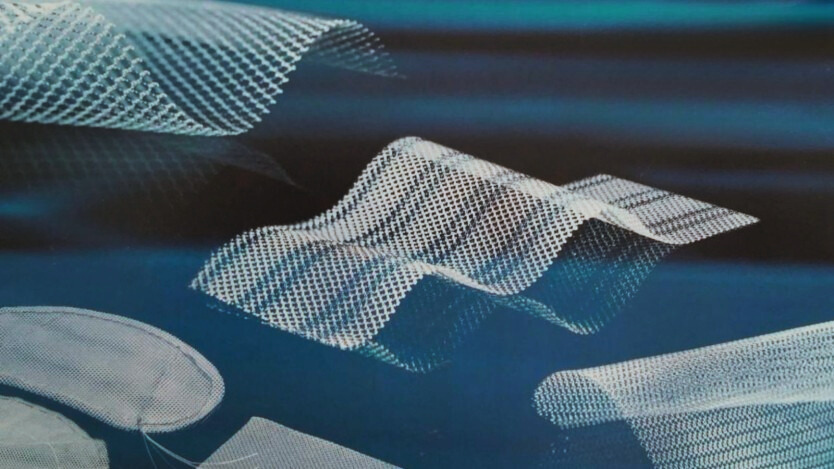
WHAT IS GORE DUALMESH & WHY IS IT DEFECTIVE?
Gore DualMesh is an implantable surgical patch designed to reinforce weak abdominal walls during hernia operations, chest wall reconstructions, and fascial bridging procedures. Manufactured by Gore Medical—the same corporation behind the trademarked Gore-Tex material used in outdoor gear—this biomaterial features a highly publicized two-sided design. The rough “corduroy” surface faces the abdominal wall to encourage host tissue ingrowth, while the smooth surface faces outward, supposedly minimizing tissue attachment to internal organs like the bowels. Gore also markets a DualMesh Plus variation, which introduces silver carbonate and chlorhexidine diacetate for short-term antimicrobial shielding.
Despite marketing campaigns heralding expanded polytetrafluoroethylene (ePTFE or Teflon) as an ultra-inert polymer, many patients have reported significant adverse events following implantation. The alleged design defects of Gore’s DualMesh result from structural flaws inherent to ePTFE:
- Material Shrinkage: ePTFE mesh contracts and shrinks substantially inside the human body over time, causing mesh distortion and painful tissue traction.
- Antibiotic-Resistant Infection Pockets: The small micro-pores inherent to ePTFE act as ideal breeding grounds for bacteria while physically blocking the body’s white blood cells from clearing the area. According to medical studies indexed by the National Institutes of Health (NIH), bacteria form complex biofilms on prosthetic mesh. These infections cannot be cleared with standard IV antibiotic treatment, frequently leaving total surgical removal as a patient’s only viable medical option.
THE 510(k) REGULATORY TRAP
A common source of confusion for patients is how seemingly defective hernia meshes remain on the market and never get recalled. Like many synthetic hernia meshes, Gore bypassed rigorous, independent clinical (human) safety trials by utilizing the FDA’s controversial 510(k) Premarket Notification clearance process.
This pathway allowed the manufacturer to fast-track approval by asserting that DualMesh was “substantially equivalent” to predicate devices already on the market. However, this regulatory pathway leaves the company open to product liability lawsuits because clearance does not mean the FDA performed independent clinical trials confirming the DualMesh is safe and effective. The 510(k) pathway offers a fast, cheap way to market a medical device, but it significantly increases the manufacturer’s legal exposure when real-world injuries occur.
If your injuries are related to other medical device complications, you can review our tracking page for the Bard PowerPort Lawsuit, which tracks similar product failure criteria.
GORE DUALMESH ATTORNEYS
If other personal injury firms have turned down your hernia mesh claim because it did not involve standard polypropylene, the hernia mesh attorneys at TheLawFirm.com will likely still review your case. We are actively pursuing individual injury claims involving Gore DualMesh and DualMesh Plus hernia mesh devices.
You do not need to know the specific model number, shape, or thickness of your implant to get started. If you meet the baseline date timeline and have undergone or scheduled a revision surgery, our dedicated legal team will handle the intensive process of retrieving your operative notes and pathology records. We operate entirely on a contingency fee framework—meaning you never pay a dime upfront, and we only receive compensation if we secure a successful settlement or verdict for you.
To check on the status of other nationwide product liability dockets, visit our central Lawsuit List.
Call Toll-Free To Speak With A Hernia Mesh Legal Representative
1-844-275-6900