

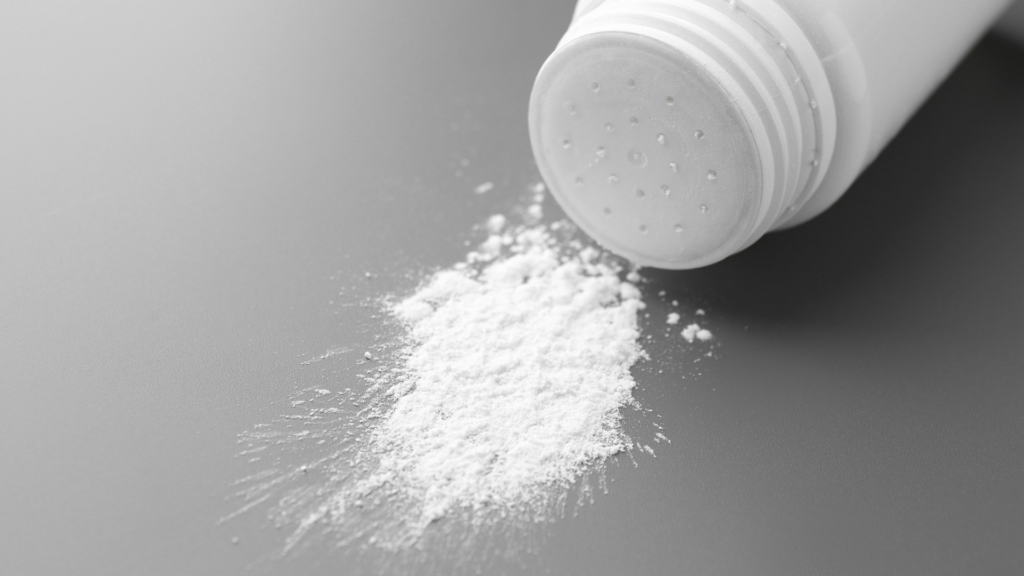
Recent court cases have shined a spotlight on the possible link between women’s regular use of talcum powder on their genitals and an increased risk of developing ovarian cancer.
In February 2016, a jury determined that the family of a 62-year-old Alabama woman, who died from ovarian cancer in 2015 after decades of using talcum powder for feminine hygiene, was entitled to $72 million in damages from Johnson & Johnson®. The company did not inform customers of the potential dangers of its powders despite being aware of the possible health risks.
According to the American Cancer Society, some scientists believe that prolonged use of talcum products can cause cancer in the ovaries when minute particles migrate through the vagina and fallopian tubes into the ovaries. Prolonged use of talc products in this manner has been associated with inflammation in the ovarian tissues, which is thought to contribute to tumor formation.
Why The Talcum Powder Lawsuit?
The central issue in the recent run of talc trials is whether talcum powder and baby powder cause ovarian cancer.
The reason for the purported link between talc and ovarian cancer is that talcum powder and baby powder manufacturers, such as Johnson & Johnson (which dominates the market for these products), have long promoted the products as safe and effective for feminine hygiene.
The suits against Johnson & Johnson allege that, because the products have been marketed in this way for so long, many women have used them in this manner for decades.
The suits also allege that, over such an extended time, particles of talc can enter the vagina, travel through the fallopian tubes, and settle in the ovaries, where they can cause complications that can lead to ovarian cancer.
In February 2016, a jury determined that the family of a 62-year-old Alabama woman, who died from ovarian cancer in 2015 after decades of using talcum powder for feminine hygiene, was entitled to $72 million in damages from Johnson & Johnson®. The company did not inform customers of the potential dangers of its powders despite being aware of the possible health risks.
According to the American Cancer Society, some scientists believe that prolonged use of talcum products can cause cancer in the ovaries when minute particles migrate through the vagina and fallopian tubes into the ovaries. Prolonged use of talc products in this manner has been associated with inflammation in the ovarian tissues, which is thought to contribute to tumor formation.
Why The Talcum Powder Lawsuit?
The central issue in the recent run of talc trials is whether talcum powder and baby powder cause ovarian cancer.
The reason for the purported link between talc and ovarian cancer is that talcum powder and baby powder manufacturers, such as Johnson & Johnson (which dominates the market for these products), have long promoted the products as safe and effective for feminine hygiene.
The suits against Johnson & Johnson allege that, because the products have been marketed in this way for so long, many women have used them in this manner for decades.
The suits also allege that, over such an extended time, particles of talc can enter the vagina, travel through the fallopian tubes, and settle in the ovaries, where they can cause complications that can lead to ovarian cancer.